Why Website Speed and Core Web Vitals Still Matter in 2026

Remember the last time you clicked a link and the page took four seconds to load? You left. So did everyone else.
That is not just a user experience problem. It is a visibility problem. Google uses page speed and Core Web Vitals as ranking signals, and slow sites consistently lose ground to faster competitors, all else being equal.
If you are running a service business in Canada and wondering why your SEO efforts are not producing the results you expected, your site speed might be part of the answer.
Does Google Still Prioritize Speed in 2026?
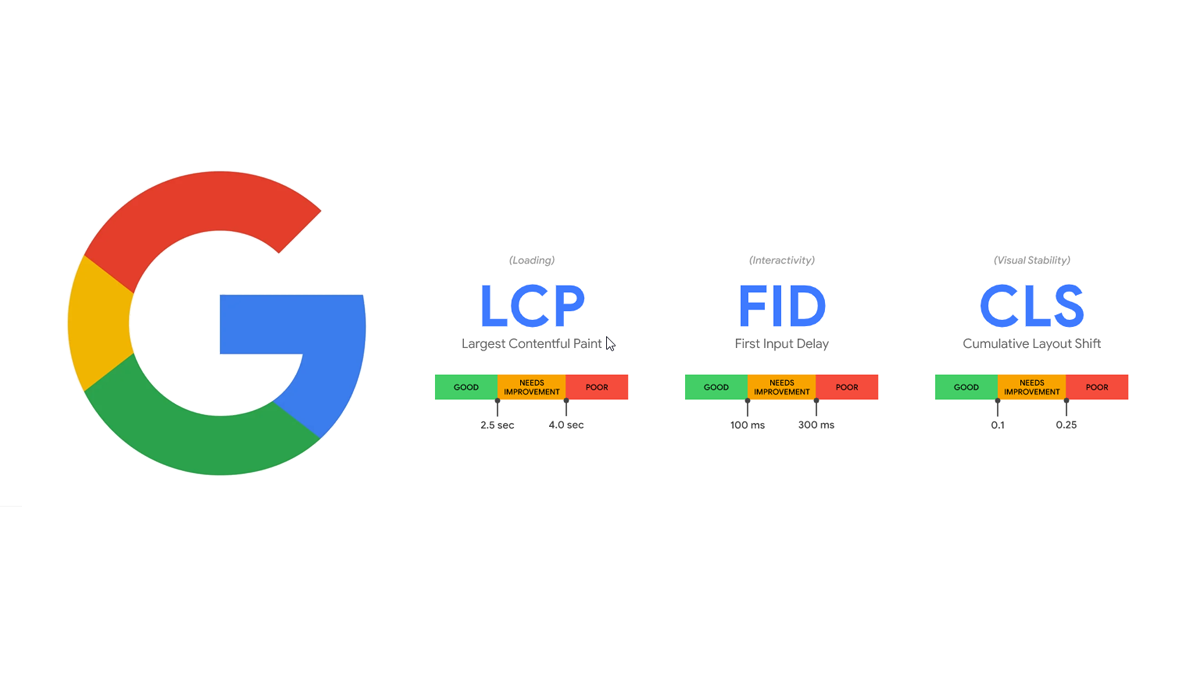
Yes. Core Web Vitals remain an active part of Google's Page Experience signals. Three metrics make up the current set:
Largest Contentful Paint (LCP) measures how long it takes for the biggest visible element on the page to load. Google wants this under 2.5 seconds. Think of it as the moment your page actually feels loaded to a visitor.
Interaction to Next Paint (INP) replaced First Input Delay in March 2024 and measures how quickly your page responds after a user interacts with it, such as clicking a button or a menu. A good INP score is under 200 milliseconds.
Cumulative Layout Shift (CLS) measures visual stability. If buttons or text jump around as the page loads and a visitor accidentally clicks the wrong thing, that is a CLS problem. Google wants a score under 0.1.
Google's Search Central documentation confirms that Core Web Vitals are used by its ranking systems and that good scores align with what those systems seek to reward. The connection to rankings is real but modest. Where the impact is less debatable is with on-page behaviour.
Why Is Speed Even More Critical in 2026?
The way people search has shifted. Google's AI-generated summaries now appear at the top of many results pages. When your site does appear in organic results, you have one shot to hold that visitor. A slow, unstable page throws that opportunity away.
Industry research from Portent, which analyzed more than 27,000 landing pages, found that a site loading in one second had a conversion rate three times higher than a site loading in five seconds. For a service business, that is not an abstract number.
Speed and design work together in the same direction. If you are thinking about how SEO and web design interact, this is a good place to start.
What Tools Can I Use to Test My Site?

These five are worth your time. None require a developer to get started.
Google PageSpeed Insights gives you a score from 0 to 100 for both mobile and desktop, and shows your actual Core Web Vitals against the pass/fail thresholds. Run it on your homepage and your most important service page. If your mobile score is below 50, that needs attention.
Google Search Console shows your real-world Core Web Vitals data pulled from actual visitors, not just a lab simulation. Look under the Experience section. Any URLs flagged as Poor are priority fixes.
GTmetrix gives a more detailed waterfall breakdown of what is slowing your page down. Good for identifying specific heavy images or scripts causing the delay.
WebPageTest lets you test your site from a Canadian server location and see what a real visitor in Toronto or Vancouver actually experiences.
Semrush or Ahrefs Site Audit covers Core Web Vitals as part of a broader technical SEO sweep. If you are already working with an SEO partner, this should be part of your regular reporting.
What Is Actually Slowing Sites Down?
The most common issues in 2026 are not complicated, but they are consistent.
Uncompressed images are the biggest offender on most small business sites. A hero image that is 4MB when it should be under 200KB can alone tank your LCP score.
Other frequent causes include too many third-party scripts loading on every page (chat widgets, booking tools, review badges), hosting plans that cannot handle modest traffic spikes, and page builders that load unnecessary code even when features are not being used.
Fixing these does not always require a developer. Image compression tools like Squoosh or ShortPixel handle most of the image problem without touching your site's code. Caching and a decent hosting plan cover much of the rest.
If your site is on a platform like Squarespace or WordPress and you are working on your local SEO strategy, site speed should be part of that conversation.

Read Related: AI Search Is Changing How Brands Get Found
Do Core Web Vitals Guarantee Top Rankings?
No, and anyone who tells you otherwise is oversimplifying. Core Web Vitals are one signal among hundreds.
Google's own documentation is explicit: good Core Web Vitals scores do not guarantee top rankings. A slow site with exceptional content and strong backlinks can still outrank a fast site with thin content. Core Web Vitals work more as a tiebreaker when everything else between two competing pages is roughly equal.
But here is the practical reality for most small service businesses: your content is often comparable to your local competitors. Speed and technical health become the differentiator. More importantly, they directly affect whether a visitor who finds you actually contacts you.
Final Thought
Page speed is not a technical luxury. For a service business trying to compete in local search, it is table stakes.
The good news is that most speed problems are fixable without a complete site rebuild. Start with Google PageSpeed Insights, fix your images, and check your Search Console for flagged URLs. If you want a clearer picture of where your site stands on both speed and overall SEO health, that is worth a proper audit.

FAQs
-
Yes. Google includes them as part of its Page Experience signals. They are not the dominant factor, but they do influence rankings, particularly when other signals are close between competing pages.
-
LCP tends to have the most visible impact because it reflects how fast your page actually feels to a visitor. But INP and CLS both affect engagement and conversions in real ways.
-
Yes, and often more directly than rankings. A page that loads slowly or shifts layout unexpectedly loses visitors before they ever see your offer.
-
After any major site update, and at minimum once per quarter. Also check after installing new plugins or third-party tools.

Anthony Yang
Hi, I’m Anthony, the founder of Elescend Marketing. Over the past three years, I’ve worked with more than 100 small businesses across North America.
Today, I lead a highly skilled SEO team and work closely with small businesses to help them reach the first page of Google and build steady organic traffic within six months. My focus is on delivering real, measurable results, not empty promises. Visit my LinkedIn profile.