AI SEO for Acupuncture Clinics: How to Rank in ChatGPT, Perplexity, and Google AI Overviews
You rank on the first page of Google. A potential patient in Toronto opens ChatGPT and types: "Which acupuncture clinic should I book near me?" Your name does not appear. A competitor does. One that ranks below you on Google. They get the booking.
This is the core problem with relying on traditional SEO alone in 2026. Google rankings and AI recommendations are driven by different systems, different signals, and different logic. Most acupuncture and TCM clinic owners have optimized for one and left the other completely unaddressed.Closing that gap starts with the foundational work we cover in our SEO for Traditional Chinese Medicine clinics program, which most AI citation strategies depend on.
This article explains exactly how ChatGPT, Perplexity, and Google AI Overviews decide which clinics to surface, and what it takes to become the clinic that gets named.
What Is AI SEO and Why Acupuncture Clinics Need to Pay Attention Now
AI SEO, sometimes called Generative Engine Optimization or GEO, is the practice of making your clinic visible inside AI-generated answers, not just traditional blue-link search results.
The patient behaviour shift is already in progress. A growing segment of health-conscious Canadians, particularly in urban markets like Toronto, Vancouver, and Ottawa, now ask AI tools for health service recommendations before they open a search engine. They phrase queries conversationally: "What should I look for in an acupuncture clinic?" or "Is there a CMTO-registered acupuncturist near me?" The AI responds with names. If your clinic is not in that answer, the patient books elsewhere, often without ever seeing your website.
The urgency here is structural, not speculative. Clinics that act on this shift now are building a retrieval advantage that will compound over the next 24–36 months. Clinics that wait will face the same catch-up problem they faced when Google Business Profiles became mandatory for local visibility. The window to move early is still open. It will not stay open.
AI systems look for: Clinics that exist as coherent, cross referenced entities across multiple credible sources, not just clinics with well-designed websites.
Most clinics get wrong: Assuming that ranking on Google means being recommended by AI. These are different systems with different input signals.
How ChatGPT, Perplexity, and Google AI Overviews Decide Which Clinics to Recommend
None of these platforms publish a confirmed ranking algorithm for local health businesses. What follows are consistent patterns observed across clinic audits and testing.
ChatGPT pulls from a large language model trained on web data up to a specific cutoff, supplemented by Bing's live index when browsing is enabled. It surfaces clinics that appear consistently across multiple credible web sources: professional directories, media mentions, review platforms, regulatory body listings, and well-structured clinic websites. A clinic mentioned only on its own website and nowhere else will rarely appear in a ChatGPT recommendation, regardless of how well that website ranks on Google.
Perplexity functions closer to a live search engine. It retrieves real-time web pages, synthesizes them, and cites sources. Clinics with clearly structured, authoritative content on their own websites, content that directly answers the questions Perplexity is responding to, perform noticeably better. Thin pages, missing practitioner credentials, and generic service descriptions all reduce the likelihood of being cited.
Google AI Overviews draw from Google's existing knowledge graph and indexed content. Clinics with complete Google Business Profiles, consistent NAP (name, address, phone) data across the web, CMTO-recognized credentials, and structured schema markup on their websites appear more frequently in these generated answers.
The common thread across all three platforms: clinics that exist in multiple authoritative contexts get recommended. A single, well-built website is necessary but insufficient. This is one of the core reasons traditional SEO alone is no longer enough for healthcare practices.
Key takeaway: AI engines synthesize from multiple sources and name one answer. There is no second position in a ChatGPT recommendation. You are either mentioned or you are not.

The Difference Between Traditional SEO and Generative Engine Optimization for TCM Practices
Traditional SEO optimizes for a crawler. Generative Engine Optimization optimizes for a synthesizer.
Google's traditional crawler ranks pages based on keyword relevance, backlink authority, page speed, and dozens of technical signals. The goal is to appear in a list of results. The patient still has to click, evaluate, and choose.
GEO works differently. AI engines do not return a list. They return a single recommended answer. That answer is synthesized from multiple sources, and the clinic that contributes the most credible, well-structured, and contextually relevant information is the one that gets named.
For TCM and acupuncture clinics specifically, this distinction matters for two reasons.
First, TCM is a regulated health profession in Ontario under the CMTO (College of Traditional Chinese Medicine Practitioners and Acupuncturists of Ontario). AI engines weight regulatory compliance signals, such as CMTO registration numbers, licence disclosures, and scope-of-practice clarity, as trust indicators when generating health-related recommendations. Clinics that make these credentials visible and machine-readable have a structural advantage over clinics that present themselves in generic marketing terms.
Second, patient queries about acupuncture tend to be multi-part and condition-specific: "Is acupuncture covered by insurance in Ontario?" or "Can acupuncture help with fertility?" or "What is the difference between TCM acupuncture and dry needling?" Traditional SEO rewards the page that best targets a single keyword. GEO rewards the clinic that has comprehensive, credible answers across the full range of questions a patient might ask before booking. The scope of content required is broader, and the quality bar is higher.
AI systems look for: Clinics that answer the full patient decision journey, not just the booking moment.
Most clinics get wrong: Publishing a single "services" page and expecting it to serve both Google rankings and AI recommendations.
Why Most SEO Agencies Fail Acupuncture and TCM Clinics
Most agencies that take on acupuncture clinic clients apply a standard local SEO playbook: optimize the Google Business Profile, build some backlinks, write a few service pages, and report keyword rankings monthly. This approach has real value for Google. It does not address the specific retrieval requirements of AI search, and it does not reflect the regulatory complexity of marketing a CMTO-regulated health practice.
The operational gaps are specific.
A generic local SEO agency does not understand that CMTO registration status is a trust anchor for AI systems, not just a legal requirement. They will not know to mark it up in schema, surface it in plain text on practitioner bio pages, or cross-reference it with the CMTO public register in a way that makes the entity recognizable to AI indexing.
A generic agency does not understand TCM diagnostic language. When they write about "our comprehensive acupuncture services," they are producing content that is indistinguishable from every other clinic in the country. AI systems, which synthesize across sources to find the most credible answer, cannot differentiate a clinic with genuine clinical depth from one with a polished-sounding homepage.
Healthcare AI SEO for regulated practitioners is a distinct discipline. It requires understanding PIPEDA compliance implications, CMTO scope-of-practice language, the difference between R.Ac. and R.TCMP credentials, and how provincial regulatory structures affect entity trust signals in AI search. These are not details a generalist agency will get right.
Key takeaway: TCM digital marketing is not a niche version of standard local SEO. The entity framework, content standards, and compliance considerations are fundamentally different.
Five Signals AI Search Engines Use to Evaluate Your Clinic's Authority
1. Entity consistency across sources
Your clinic name, address, phone number, and practitioner names need to appear identically across your website, Google Business Profile, CMTO public register, RateMDs, Yelp, and any directory where you are listed. Inconsistency across sources creates ambiguity. AI engines resolve ambiguity by not recommending you.
2. Credential visibility
CMTO registration is a hard trust signal for Ontario-based clinics. It should appear on your website in plain text, not buried in a PDF or image. Full practitioner names, registration numbers, and specializations should be human-readable and schema-marked. Clinics that make CMTO credentials visible are effectively speaking the same language as the regulatory data AI engines cross-reference.
3. Content depth on core treatment topics
Clinics with dedicated pages for conditions like chronic pain, fertility support, stress, and sports recovery give AI engines more to work with than a general "services" list. Each page should directly answer the questions a patient would ask a practitioner on a first call. This is exactly the approach we outline in our guide to optimizing your acupuncture and TCM clinic website.
4. Third-party mentions and citations
A clinic mentioned in a local health publication, a podcast, a physiotherapy clinic's referral page, or a community news outlet carries more weight than a clinic that exists only on its own domain. AI engines treat consistent third-party citation patterns as a proxy for real-world reputation, particularly in regulated health categories where general-purpose sources are less likely to fabricate claims.
5. Review volume and recency
Google reviews, RateMDs ratings, and similar signals feed into AI recommendation logic, particularly for Perplexity and Google AI Overviews. A clinic with 12 recent, specific reviews (mentioning conditions treated, practitioner names, and outcomes) consistently outperforms a clinic with 80 reviews from five years ago. Recency matters. Specificity matters more.
AI systems look for: A coherent entity that looks the same everywhere, not a clinic with a great website and nothing else.
Most clinics get wrong: Investing in website design without building the off-site entity signals AI engines need to recognize and recommend them.
How to Optimize Your Clinic's Website Content for AI Search Recommendations
The structural principle behind AI-friendly content is simple: if an AI engine cannot extract a clear, credible answer from your page without reading the entire thing, your page will not be cited.
Write answer-first sections. Every H2 on your website should open with a direct, complete sentence that answers the question implied by that heading. "Acupuncture for fertility support at our Toronto clinic uses a TCM protocol that combines body acupuncture, moxibustion, and lifestyle guidance across a recommended course of 6–12 treatments." That is a citable sentence. "We offer a range of fertility support options" is not.
Use specific, named treatments. Generic descriptions reduce AI citation probability. Name the protocols you use. Reference the diagnostic methods: tongue diagnosis, pulse diagnosis, and TCM pattern differentiation. Describe the practitioner's training by institution and graduation year where possible. Specificity is the mechanism that distinguishes your content from every other acupuncture clinic marketing page.
Structure FAQs for direct extraction. FAQs should function as standalone question-and-answer pairs. Each answer should be complete without requiring the reader to have read the surrounding article. AI engines frequently extract FAQ content for use in generated answers, but only when the answer is self-contained and direct.
Address conditions by name. Patients searching for help with sciatica, insomnia, PCOS, or post-surgical recovery will trigger AI queries that look for condition-specific expertise. A clinic that names and addresses these conditions with genuine clinical depth will be cited. A clinic with a single "conditions treated" bullet list will not.
The standard required for AI retrieval is closer to a clinical reference resource than a marketing brochure. This is a significant shift in tone and structure, and most acupuncture clinic websites are not close to meeting it. Our guide on how to attract patients to a new acupuncture clinic covers the content fundamentals that apply equally to AI visibility.
Key takeaway: AI engines cite sources that answer questions completely. Every page on your website should be able to stand alone as a credible, direct answer to a specific patient question.
Structured Data and Schema Markup: Why AI Engines Reward Clinics That Use It
Schema markup is code added to your website that tells search engines, and AI systems that read web content, exactly what type of information is on your page. It does not change what visitors see. It changes how machines read and classify your content.
For acupuncture and TCM clinics, the most important schema types are:
LocalBusiness / MedicalBusiness schema confirms your clinic type, address, hours, phone number, and service area in machine-readable format. Without it, AI engines infer your business details from page text, which introduces errors and inconsistency.
Physician / MedicalOrganization schema specifies each practitioner's credentials, CMTO registration, specializations, and languages spoken. This is where CMTO credentials become machine-readable, not just human-readable.
FAQPage schema marks up your FAQ section so AI engines can directly extract and use the question-and-answer pairs. Clinics with FAQPage schema implemented correctly on high-value pages see their FAQ content appear inside Google AI Overviews far more frequently.
Service schema, applied at the individual treatment or condition page level, specifies what the service is, who provides it, and what the service area covers.
One Canadian-specific consideration: if your website collects patient information through intake forms, booking systems, or contact forms, your privacy policy should explicitly address PIPEDA compliance. AI engines increasingly treat privacy disclosure as a trust signal for health-related businesses. This is a minor addition with a meaningful effect on how your site is classified.
Schema implementation requires a developer or a knowledgeable SEO partner. Done correctly, it reduces the inferential work AI engines have to do and makes your clinic a far cleaner source to cite. CMTO schema implementation is one area where a generalist agency will almost always miss the mark.
AI systems look for: Machine-readable signals that confirm your clinic type, location, credentials, and services, not just written descriptions of those things.
Canadian-Specific Considerations: How CMTO Credentials and Provincial Regulation Signal Trust to AI
In Canada, acupuncture regulation varies by province. Ontario is one of the most tightly regulated jurisdictions, with the CMTO overseeing registration, scope of practice, and continuing competency requirements for Traditional Chinese Medicine practitioners and acupuncturists.
This regulatory structure is, from an acupuncture local SEO standpoint, an advantage, if clinics use it correctly.
The CMTO maintains a public register of all registered practitioners. AI engines that crawl health-related sources treat appearances on regulatory body registries as strong entity validation signals. A practitioner whose name appears consistently on your website, in your schema markup, and in the CMTO public register is far more likely to be recognized as a legitimate named entity than a practitioner who exists only on your website.
Practical steps for Ontario clinics: list your practitioner's CMTO registration number on your website's bio page in plain text, not in an image. Include their regulated title (R.Ac. or R.TCMP as applicable). Link to the CMTO public register lookup tool where possible. These details allow AI systems to cross-reference and validate your entity, the same validation step that determines whether you get cited.
For clinics in British Columbia, the CTCMA (College of Traditional Chinese Medicine Practitioners and Acupuncturists of British Columbia) plays the equivalent regulatory role. In Alberta, TCM practitioners register with CAHP (College of Allied Health Professionals). Each regulatory body's public register is a credibility anchor for AI engines, and each represents an off-site entity signal most clinics have not yet made machine-readable.
This is the same principle behind why most healthcare marketing advice fails: building credibility signals into the structure of your digital presence, not just the surface of it.
Key takeaway: CMTO registration is not just a compliance requirement. For Ontario-based clinics, it is the single strongest trust signal available to AI search engines, if you make it visible and machine-readable.

Common Questions from Clinic Owners Considering AI SEO
"I already rank on Google. Do I really need this?"
Yes. This is the most common misconception we encounter. Google rankings and AI recommendations are driven by different systems. Ranking well on Google does not translate automatically to being cited by ChatGPT, Perplexity, or Google AI Overviews. We have seen clinics ranking in position one on Google that do not appear in any AI-generated local recommendation. The two channels require separate, though overlapping, optimization work.
"My clinic is small. Is AI SEO relevant for me?"
The size of your clinic does not determine whether patients use AI tools to find you. Urban Canadian patients, particularly in the 25–45 age demographic that drives the most acupuncture bookings, are already using ChatGPT and Perplexity for health service recommendations. If a competitor clinic in your neighbourhood is being recommended and you are not, the size of your practice is irrelevant. The booking goes to them.
"Could AI SEO create compliance issues for my practice?"
Not if it is done correctly. Responsible acupuncture clinic marketing within an AI SEO framework means making your existing CMTO credentials more visible and machine-readable, not making claims beyond your regulated scope of practice. In fact, structuring your content around CMTO registration, regulated titles, and scope-of-practice clarity actively supports compliance, because it keeps your digital presence aligned with how your regulatory body classifies your practice.
"How is this different from local SEO?"
Local SEO optimizes your visibility in Google Maps, the local pack, and location-based searches. AI SEO optimizes your clinic to be named inside an AI-generated answer, a completely different output format. Local SEO signals (Google Business Profile, NAP consistency, local citations) overlap with AI SEO requirements, but AI SEO also requires structured schema markup, regulatory entity building, answer-first content architecture, and a cross-source presence that local SEO alone does not address.
What Elescend Does Differently: Our AI SEO Framework for TCM Clinics
Most SEO agencies apply the same framework to every client. Acupuncture clinic, law firm, e-commerce brand: the deliverables look the same because the process is the same.
We do not work that way.
Elescend's AI SEO work for Canadian healthcare and TCM clinics starts with an entity audit: we map every place your clinic and practitioners appear online, identify inconsistencies in how your name, credentials, and services are presented, and establish a baseline for how AI engines currently classify you. Most clinics we audit have at least four to six critical inconsistencies that actively suppress AI citation. We resolve those before touching content.
From there, we build what we call an AI citation architecture, a connected system of content, schema markup, and off-site presence that gives AI engines multiple coherent, cross-referenced sources to draw from when generating a recommendation that includes your clinic. The components are: entity consolidation across all directories and regulatory listings, answer-first content restructuring on core treatment and condition pages, CMTO schema implementation, FAQ Page and Medical Business structured data, and a third-party citation strategy targeting Canadian wellness publications and healthcare directories.
This is not a one-time optimization. AI engines update their training data and real-time indexes continuously. Clinics that stay visible in AI search do so because they maintain a consistent signal across all channels, not because they published one strong article.
We work exclusively with health and wellness businesses in Canada. That means we understand CMTO registration requirements, PIPEDA compliance implications, and the clinical language that builds genuine trust with TCM patients.This is also the foundation of our marketing for acupuncturists work, where AI citation architecture is built on top of the same entity and content standards. We also understand what it costs a clinic when the healthcare SEO agency they hired does not understand these things, and produces content that reads like it was written by someone who has never treated a patient.
Key takeaway: Elescend's AI SEO framework is built specifically for regulated Canadian health practices. The entity audit, CMTO schema implementation, and citation architecture are not standard deliverables from a generalist agency.
How Acupuncture Clinics Get Recommended by ChatGPT and AI Search Tools
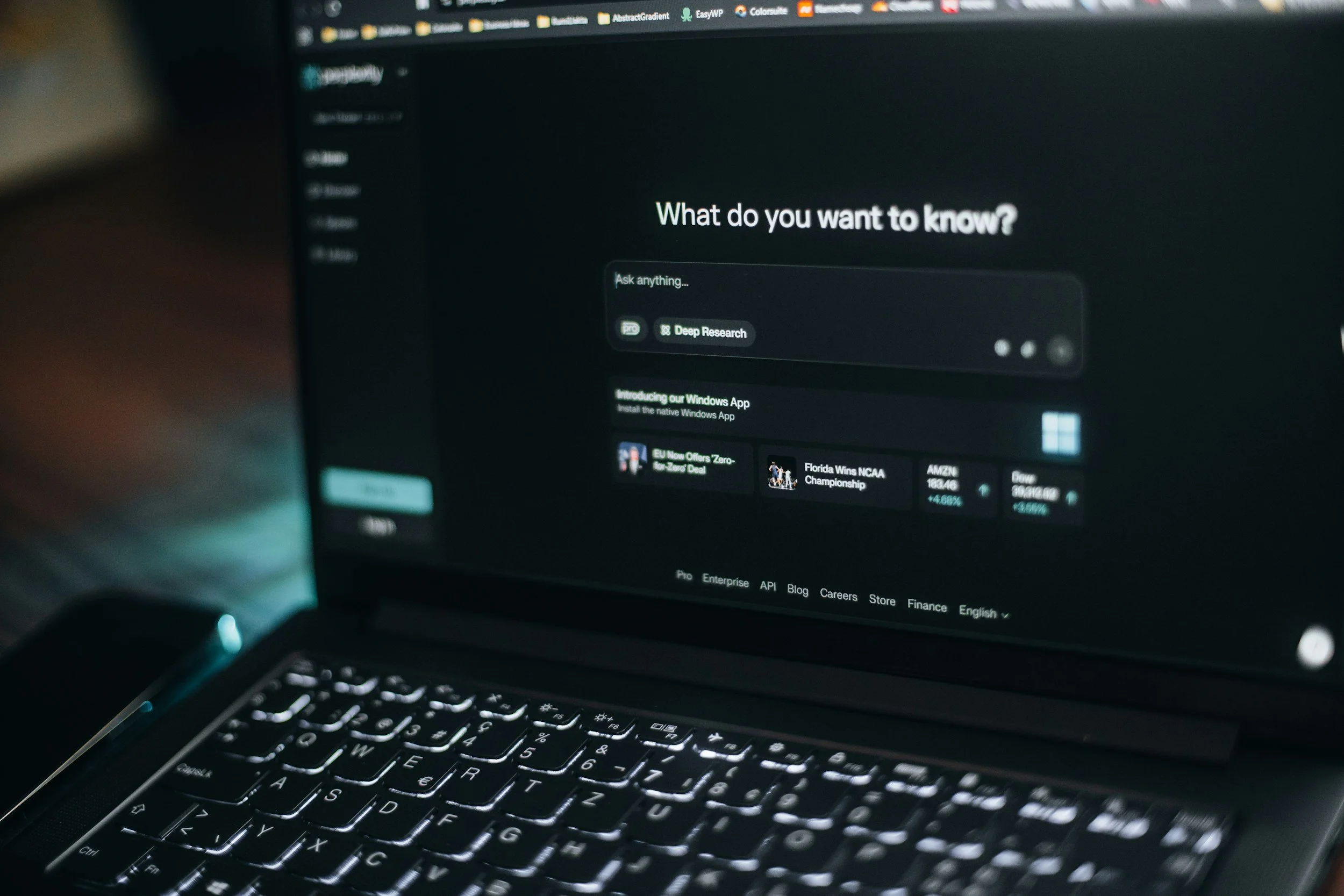
AI search engines like ChatGPT, Perplexity, and Google AI Overviews recommend acupuncture clinics based on entity consistency, credential visibility, and content depth, not keyword density alone. Practices that appear consistently across their own website, the CMTO public register, Google Business Profile, and third-party directories are cited in AI-generated answers significantly more often than those that exist only on their own domain. For Ontario clinics, CMTO registration (R.Ac. or R.TCMP) functions as a hard trust signal when it appears in plain text and schema markup on practitioner bio pages. Clinics that implement FAQPage schema, MedicalBusiness structured data, and answer-first content architecture are the ones appearing in AI overviews when patients ask "which acupuncture clinic should I book?" The gap between ranking on Google and being recommended by AI is real, and most Canadian TCM clinics have not addressed it yet.
Action Plan: Three Steps Your Acupuncture Clinic Can Take This Month
Step 1: Run a cross-source entity audit
Search your clinic name and each practitioner's name across Google, ChatGPT (with browsing enabled), Perplexity, the CMTO public register, your Google Business Profile, and any directories where you are listed. Document every inconsistency in how your name, address, credentials, and services are presented. Each inconsistency is a friction point for AI citation, and most clinics find more than they expect.
Step 2: Rewrite two to three core service pages with answer-first structure
Pick your highest-traffic treatment pages and restructure them. Every H2 opens with a direct, complete sentence. FAQs are self-contained question-and-answer pairs. CMTO registration appears in plain text. Practitioner bios include regulated title, registration number, and clinical training. This is the minimum viable content standard for AI citation. Our article on using social media to grow your acupuncture or TCM clinic covers the content principles that carry across all channels, including your website.
Step 3: Implement LocalBusiness and FAQPage schema
If your website does not have schema markup, this is the single highest-impact technical change you can make for AI search visibility. Have a developer implement LocalBusiness schema (or MedicalBusiness if your platform supports it) and FAQPage schema on your top three pages. Validate each implementation with Google's Rich Results Test before publishing.
These three steps will not complete your AI SEO strategy, but they will close the most common and most costly gaps we find in first audits with TCM clinics.

FAQ
-
Traditional SEO optimizes your website to rank in a list of blue links. AI SEO, or Generative Engine Optimization, optimizes your clinic to be named inside an AI-generated answer. The patient never sees a list; they see one recommended clinic. The signals AI engines use overlap with traditional SEO but also include entity consistency across sources, CMTO credential visibility, and structured data markup. For Canadian TCM clinics, the two disciplines require separate and coordinated work.
-
Indirectly, yes. ChatGPT with browsing enabled pulls from Bing's live index, and strong Google SEO often correlates with strong Bing presence. Ranking on Google does not guarantee AI citation. Clinics rank on Google and go unmentioned in AI answers regularly. The two systems require separate, though overlapping, optimization efforts.
-
For Ontario-based clinics, CMTO registration is the single strongest trust signal available. It connects your clinic to a verifiable regulatory entity with a public register that AI engines can cross-reference. Clinics that make CMTO credentials visible in plain text and schema markup are consistently more citable than those that do not.
-
There is no fixed timeline, because AI engines update on different schedules. Google AI Overviews can reflect changes within days of a page being re-crawled. ChatGPT's base model updates on a longer cycle, though browsing-enabled responses reflect live content. In the clinics we have worked with, systematic AI SEO improvements produce measurable changes in citation frequency within 2–4 months.
-
Yes, particularly for Perplexity and Google AI Overviews. Review volume, recency, and specificity all contribute. Reviews that mention the practitioner's name, the condition treated, and the outcome are the most valuable. A clinic with 20 recent, specific reviews will typically outperform a clinic with 100 older, generic reviews in AI-generated recommendations.
-
Schema implementation requires either a developer or a platform plugin (many WordPress SEO plugins support LocalBusiness schema). It is a one-time setup with ongoing maintenance when services or practitioners change. For most clinics, the implementation time is 2–4 hours with a developer familiar with health business schema.
-
Yes. A single "conditions treated" list has very low AI citation value. Dedicated pages for conditions like chronic pain, fertility support, anxiety, and sports recovery, each with condition-specific clinical content, practitioner experience notes, and FAQ sections, give AI engines multiple citation-ready pages rather than one generic one.
Next Steps
If you have read this article and recognized your clinic in any of the gaps described, no schema markup, inconsistent practitioner credentials, generic service pages, or no third-party citations, the gap between where you are and where you need to be is fixable. It requires a structured approach, not a patch.
The clinics that will win AI search visibility in the Canadian TCM market over the next two years are the ones building their AI citation architecture now, while most competitors are still treating acupuncture clinic marketing as a Google-only problem.
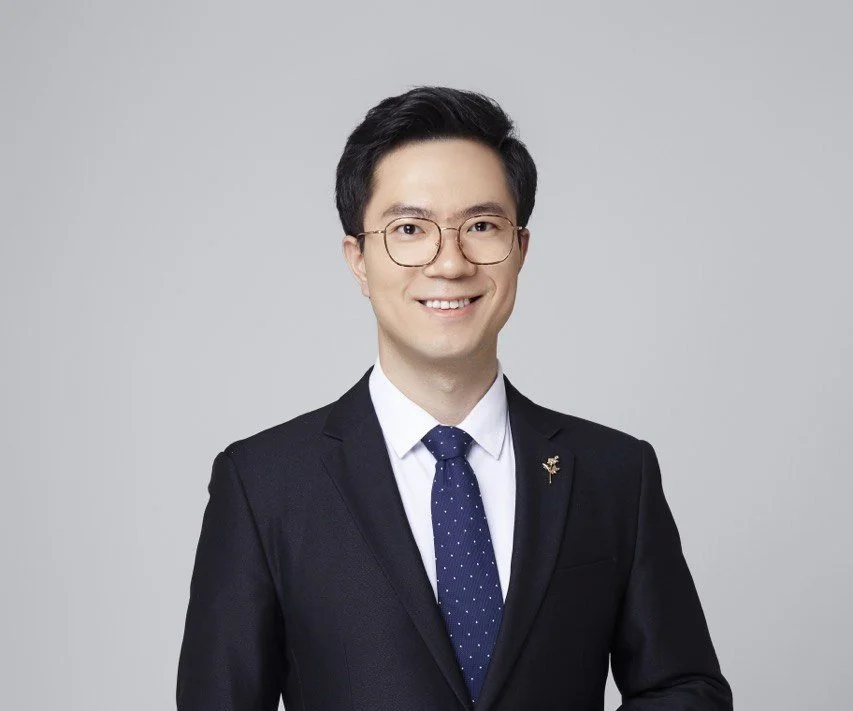
Anthony Yang
Hi, I’m Anthony, the founder of Elescend Marketing. Over the past few years, I’ve had the privilege of partnering with more than 100 small businesses across North America. This includes over 30 TCM and acupuncture clinics where we transformed their digital presence into a consistent growth engine.
I believe that successful marketing for health practitioners is about the “Science of the Sequence.” Today, I lead a specialized team of web designers, SEO experts, and media buyers dedicated to building a seamless journey for your patients. From developing high conversion, SEO ready websites to scaling your practice through precision Google and Meta advertising, our mission is to ensure your clinic dominates its local market.
I am here to help you bridge the gap between world class TCM expertise and the modern North American patient. Visit my LinkedIn profile.