

SEO for Acupuncture and TCM Clinics in Washington
The naming problem, and why it is the whole strategy
Washington licenses the profession as Acupuncture and Eastern Medicine Practitioner through the Department of Health, under RCW 18.06. The credential has carried different names over time, and current law lets a licensee use the title acupuncturist (Ac), licensed acupuncturist (L.Ac.), acupuncture and Eastern medicine practitioner (AEMP), EAMP, or any derivative in advertising, professional literature, and billing.

Elescend Marketing runs SEO for acupuncture clinics across Washington, built around a naming split most clinic websites here get wrong: the legal title on your license is not the word your patients search.

That flexibility creates a real problem for search. The regulator, the practitioner, and the patient effectively use three different vocabularies for what is, legally, the same service. A DOH database search uses "Acupuncture and Eastern Medicine Practitioner." A practitioner's own training often uses "EAMP" or "L.Ac." A patient searching Google almost always types "acupuncture," rarely "Eastern medicine practitioner," and essentially never "EAMP."
The page prescribes a clear split. Legal title and any formal disclosure sit in schema markup, the credential line, and the About page, worded to match the statute exactly. Patient-facing language, meaning H1s, service headings, and the Google Business Profile category, uses the word the patient actually searches: acupuncture. A clinic that leads its homepage H1 with "Eastern Medicine Practitioner" is technically correct and functionally invisible to the terms that drive appointments.
What Washington patients are actually searching for
Semrush, United States database, August 2026
Seattle carries the most volume in the state. Spokane matches Seattle's keyword difficulty exactly, but at roughly a third of the search volume, meaning a third of the competing clinics and content, so a Spokane clinic reaches a comparable ranking position with less content and link-building spend than the difficulty score alone suggests. Tacoma sits slightly harder than both. Bellevue's volume is too small to anchor a standalone strategy and works better as a location signal inside a broader Seattle-metro build.
Point injection therapy deserves its own page, not a bullet point
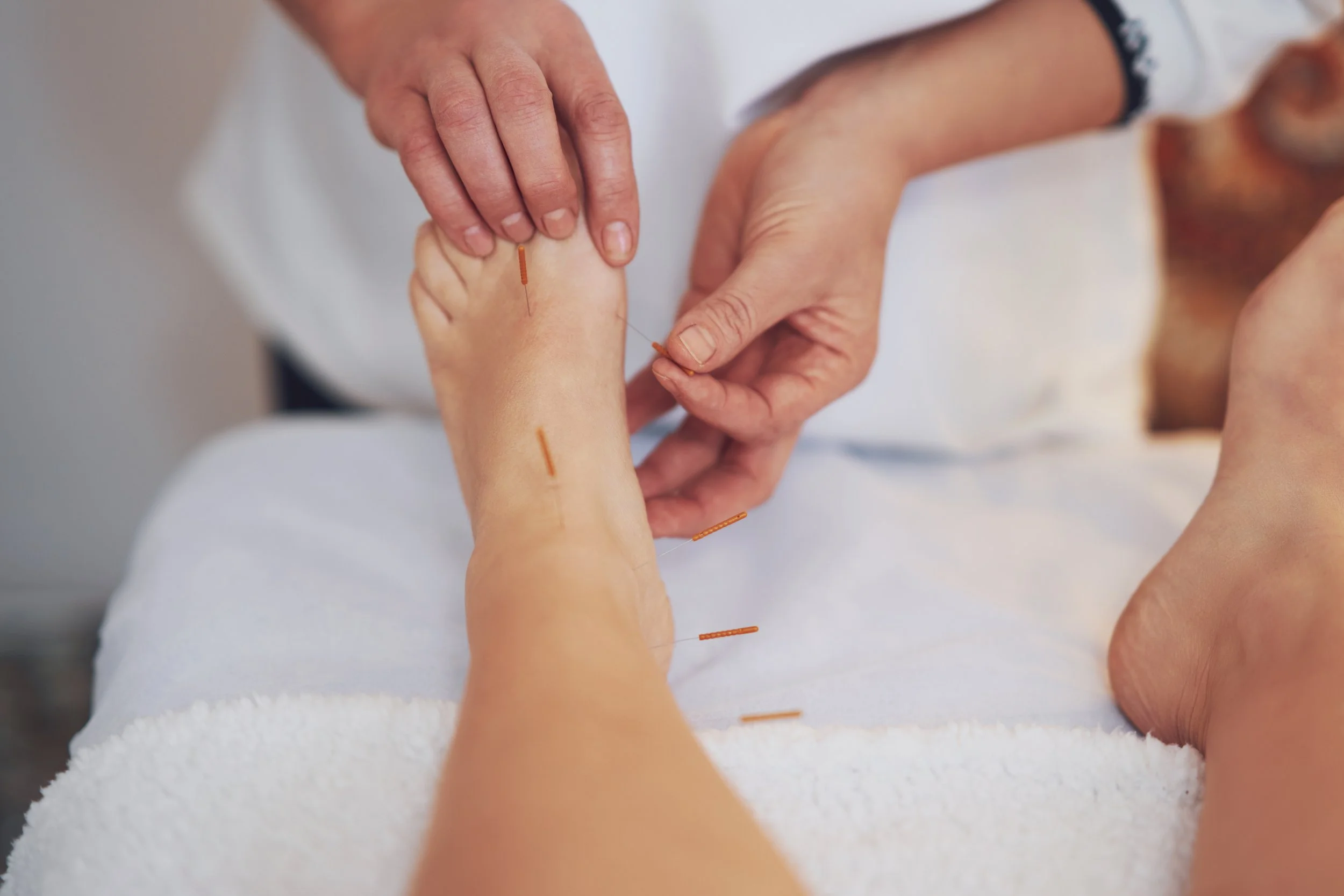
Point injection therapy is a separately regulated scope item in Washington, with its own training requirements under WAC 246-803-040, distinct from general acupuncture practice. A clinic offering it is offering something a generic "our services" bullet list undersells. The same logic extends to cupping and herbal consultations: each has distinct enough patient search behaviors to justify its own page rather than a mention buried in a paragraph. Service-specific pages also give a clinic more surface area to be cited by AI Overviews answering questions about a specific treatment.
Seattle, Bellevue, Tacoma, and Spokane are four fights, not one

Treating Washington as a single Seattle-and-suburbs market undersells the state. Seattle, Bellevue, Tacoma, and Spokane are four separate Local Pack fights with different competitive sets and patient bases. Spokane, at 320 monthly searches, is a genuine secondary market on the eastern side of the state, frequently treated as an afterthought by clinics fixated on Seattle. A clinic with a Spokane location should treat it as a first-class market, not a footnote.
How we turn search demand into booked patients
Rankings are not the deliverable. Every contact form is named after the page it sits on, so when an enquiry arrives we know which page produced it, and submissions route securely to one monitored inbox, with compliance for patient information handled by the clinic's own practice management or CRM system rather than by our forms. Google Business Profile reporting covers calls, direction requests, and profile actions. Call tracking ties phone enquiries back to the same source data. Your monthly report is split in two: what was done, and what the performance was against the prior period.
Winning the local pack and the AI answer layer
Two surfaces now decide whether a Washington patient finds a clinic. Condition queries are the AI Overview fight, rewarding clearly structured, factually specific, citable content using the vocabulary patients actually type. Every condition page stays within DOH advertising rules: no cure claims, no language that overstates an outcome. "Near me" and city-plus-acupuncture queries are the Local Pack fight, rewarding proximity, review volume, and a matching profile. Getting the naming split right, patient language for search-facing content, legal title for credentials, is what lets a Washington clinic compete cleanly on both surfaces at once.
Frequently asked questions
-
Brand as acupuncture for anything patient-facing: H1s, service pages, and the Google Business Profile name and category. Use the full legal title, Acupuncture and Eastern Medicine Practitioner, in credential lines, schema, and formal disclosures, where accuracy against RCW 18.06 matters more than search volume.
-
Cost depends on the metro. Spokane clinics sit toward the lower end given comparable difficulty at far lower competitive volume than Seattle. Seattle and Tacoma clinics sit higher, since more competitors are actively contesting those terms. We quote after a free audit, once we can see the actual gap.
-
Yes. Spokane carries real, standalone search volume and a distinct patient base on the eastern side of the state. Folding it into a Seattle-first strategy leaves that demand largely uncaptured.
-
Expect three to six months for measurable movement on service-line and neighbourhood terms, and six to nine months on the city head terms such as acupuncture Seattle. Clinics with an established Google Business Profile and steady review flow move faster than clinics starting from zero.

Get a free visibility review for your Washington clinic
We will review your site, your Google Business Profile, and your visibility in both the map pack and AI answers, and show you exactly where the gaps are. No commitment required.

Anthony Yang, Founder and Team Leader, Elescend Marketing
Anthony is the founder and team leader at Elescend Marketing, where the SEO and GEO team is led by a senior specialist with more than 15 years of search experience. The team has worked with over 30 acupuncture and TCM clinics across Canada, the United States, and the United Kingdom, part of more than 100 businesses served. Its clinic work covers state board advertising rules, professional title and disclosure requirements, secure patient enquiry routing, and lead attribution.
Washington acupuncture SEO is won by separating the legal title from the patient-facing one: use Acupuncture and Eastern Medicine Practitioner where the law requires it, and use the word acupuncture everywhere a patient is actually searching.