

SEO for Physical Therapy Clinics
What SEO for a Physical Therapy Clinic Actually Involves
SEO for a physical therapy clinic is the work of making the practice the obvious result when someone nearby searches for a condition it treats. It has four parts: a Google Business Profile complete enough to hold a map pack position, a page for each condition the clinic treats rather than each modality it offers, the structured data and technical signals that let search engines and AI assistants read those pages correctly, and enough qualifying detail on each page that the people who arrive are people the clinic can actually accept.
That last part is what separates clinic SEO from ordinary local SEO, and it is the part most agencies skip.

Ranking Is Not the Hard Part
The hard part is ranking for something worth ranking for. A physical therapy clinic can reach page one for its own name, for "physical therapy near me," and for the modalities it lists on its services page, and still see no change in bookings. Those are either branded searches from people already sent by a physician, or searches so broad that the clinic is one of dozens of results, or searches nobody performs.

The queries that fill a schedule are narrower and less obvious:
A condition plus a location, such as plantar fasciitis treatment in a specific city
A procedure plus recovery, such as rehabilitation after knee replacement
A payer or access question, such as whether a referral is needed before booking
A comparison, such as physical therapy versus chiropractic for a given problem
Each of those is a page. Most clinic websites have none of them.

What Your Site Says Versus What Patients Search
| What the services page says | What the patient actually types | The page that captures it |
|---|---|---|
| Instrument-assisted soft tissue mobilization | "why does my shin hurt when I run" | Shin splint treatment |
| Manual therapy | "stiff neck cannot turn head" | Neck pain and stiffness |
| Gait and balance training | "keep losing my balance walking" | Balance and fall prevention |
| Post-surgical rehabilitation | "how long is physical therapy after knee replacement" | Knee replacement recovery |
| Dry needling | "shoulder pain that will not go away" | Chronic shoulder pain |
| Vestibular rehabilitation | "room spins when I stand up" | Vertigo and dizziness |
| Pelvic floor therapy | "leaking when I sneeze" | Pelvic floor rehabilitation |
The left column is written by a clinician. The middle column is written by a patient. The right column is the page that connects them, and it is the page most clinic sites are missing.
Why Most Physical Therapy SEO Underdelivers
The site is built around modalities, not conditions
Clinics describe what they do. Patients search for what is wrong with them.
A services page listing manual therapy, dry needling, gait training, and instrument-assisted soft tissue mobilization is accurate, professional, and almost entirely invisible, because none of those terms is what a person with a painful shoulder types into Google. Every condition the clinic treats competently is a page it does not have, and every one of those missing pages is demand going to a competitor or to a content site.

One page is asked to rank for everything
Serving several areas is a legitimate reason to have several pages. Copying one page and swapping the place name is not. Near-identical pages across nearby areas are increasingly left unindexed, which means the effort produces nothing and can dilute the pages that were working.

Location pages get duplicated instead of differentiated
The most common structure is a single page attempting to cover the whole practice. Search engines resolve ambiguity by ranking something more specific, so a broad page tends to land in the twenties and thirties for every term it targets and win none of them.
Depth beats breadth here. A clinic with fifteen genuine condition pages tends to out-rank a clinic with one comprehensive page, even when the comprehensive page is better written.

Structured data is missing
Without organization, location, service, and FAQ markup in place, a clinic is asking search engines to infer what it is, where it operates, and what it treats. Markup will not carry a weak page, but leaving it off means competing with one hand behind your back on the things it does settle: business type, service area, and which questions the page answers.
Nothing filters the traffic
A page that ranks well and attracts people the clinic cannot accept has cost the practice money. Access rules, referral requirements, and coverage vary by state and by plan, and a page that says nothing about them sends the front desk a queue of calls that cannot become appointments.
What We Do
Condition Page Architecture
We map the conditions the clinic treats against what people in its area actually search for, then build the pages that are missing. This sits inside the broader method on our SEO for clinics page. Each one targets a real query with real volume, answers it properly, and links back to the practice pages that convert.
This is slower than publishing a blog and considerably more durable. Condition pages accumulate; blog posts decay.

Local Search and the Map Pack
For a clinic, the map pack usually matters more than position one in the organic results, because a patient is choosing between three listings on proximity, review volume, and profile completeness.
The work covers claiming and completing the Google Business Profile, aligning name, address, and phone details across directories, adding accurate service and treatment categories, and building a routine for requesting reviews rather than hoping for them. Our local SEO services page covers the method in more detail

Technical Foundations and Structured Data
Crawlability, page speed, mobile rendering, internal linking, and the schema markup that tells a search engine what the practice is and where it operates. Our technical SEO services page covers this layer, and the on-page work sits on our on-page SEO services page.

Clinical Review Before Anything Publishes
Condition pages carry clinical statements, and clinical statements attach to your professional reputation, not ours.
We write the content. You review it before it publishes, and where a page makes a clinical claim we ask you or the treating practitioner to verify accuracy first. Nothing describing a condition, a course of treatment, or an expected outcome goes live on a claim a marketer made up. If a page cannot be written accurately without clinical input, we do not publish it. We ask.
Qualifying Copy
Each page states plainly what the clinic treats, what access looks like, and what happens at a first appointment. This costs a little traffic and improves the traffic that remains, because the people who call have already self-selected.
Visibility in AI Search
A growing share of health research starts in an AI assistant rather than a search box. These systems read ordinary prose perfectly well, so structured data is not what wins a citation. What tends to get quoted is content that answers a specific question in a self-contained passage, backed by a business profile and location details that are consistent everywhere they appear. The work overlaps heavily with the content and local work above, which is why it is rarely a separate budget line. Our AI SEO services page explains the approach.
Measurement
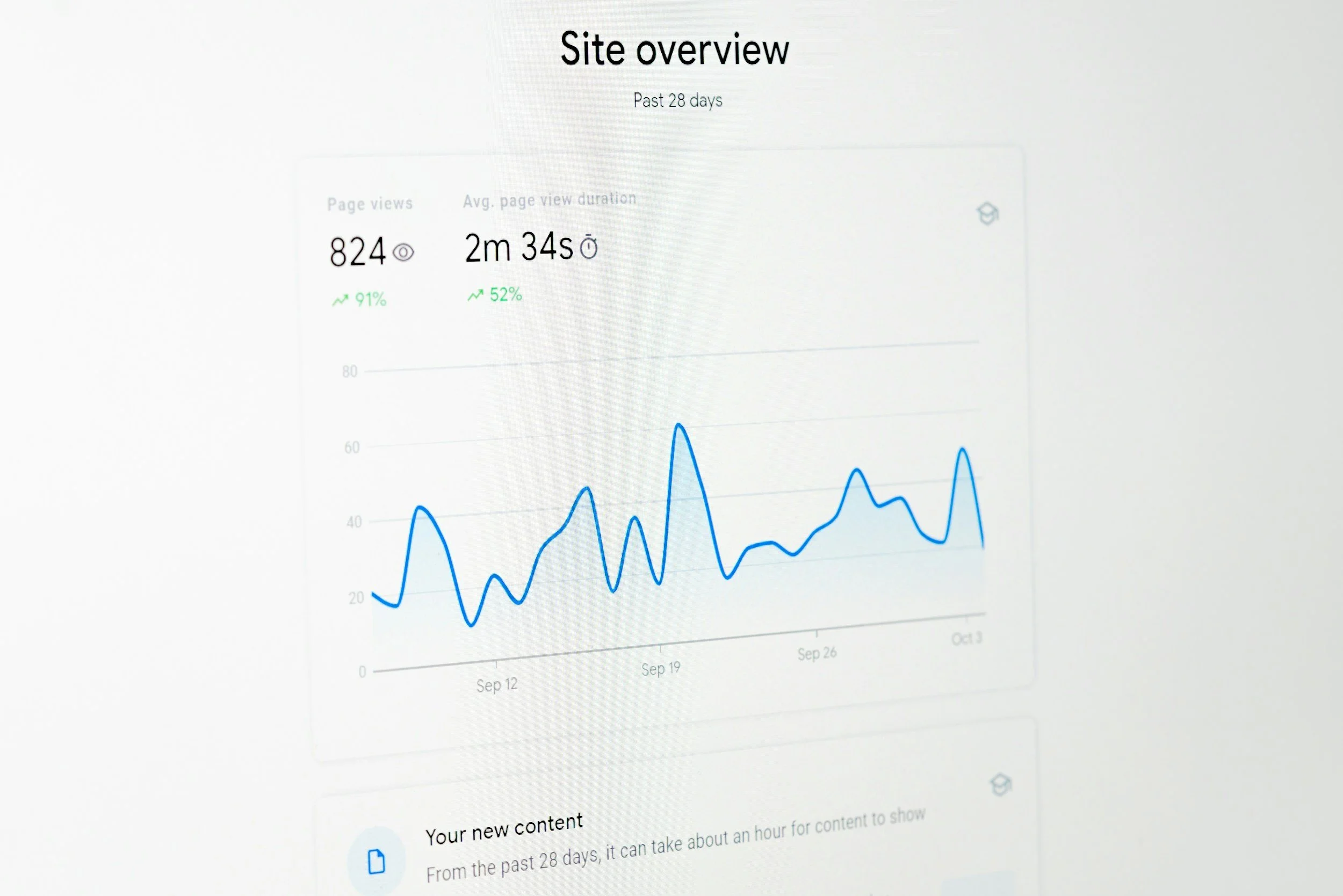
We report rankings, impressions, calls, and form submissions. Worth being straight about the limit: because patient information cannot flow into analytics platforms, no agency can hand a clinic a clean end-to-end line from a keyword to a completed course of care. What can be measured accurately is which pages are indexed, which are gaining impressions, and how many inquiries arrive. Anyone promising true booking-level attribution for a clinic is either overstating what their tracking does or sending data into places it should not go.
In the early months the signal to watch is indexation and impressions in Search Console, because inquiries follow impressions rather than arriving alongside them.
Where SEO Fits in Your Wider Marketing
This page covers organic search. If you are weighing SEO against paid advertising, referral marketing, and front desk conversion as a whole, our physical therapy clinic marketing page covers the full channel mix and how to sequence it. For paid campaigns specifically, see Google Ads for clinics.

Where SEO Fits in Your Wider Marketing
This fits if you:
Own or manage an outpatient physical therapy or physiotherapy practice
Serve a defined local or regional service area
Treat identifiable conditions you could build genuine pages around
Have clinical capacity to take on new patients
Want durable visibility rather than a campaign that stops when the budget does
It is a poor fit if you need patients this week. Organic search compounds over months.
Practices that also offer chiropractic or massage may find our SEO services for chiropractors and marketing for massage therapists pages useful.

Why Elescend?
Our team has over 15 years of SEO experience in healthcare and wellness
We have worked with more than 100 businesses
No lock-in contracts or bloated packages
Built for small businesses with flexible pricing
A hands-on, senior-led team that explains what we are doing and why
Get a Free SEO Audit for Your Physical Therapy Clinic
We will review your website, local listings, and keywords, and show you exactly how to improve, in what order. No cost, no obligation.
Frequently Asked Questions
-
Google Business Profile and listing corrections tend to move first. Condition pages build visibility over months and keep compounding afterward, because each page continues earning once it is indexed. The first meaningful signal is not bookings but indexation and impressions in Search Console, which is why a thirty-day review should be checking whether pages are indexed and gaining impressions rather than whether the phone is ringing. Exact timelines depend on how competitive your area is and what condition your site starts in.
-
Conditions and procedures, paired with the areas you serve, rather than the modalities you offer. A page for rehabilitation after knee replacement will out-perform a page for instrument-assisted soft tissue mobilization every time, because the first matches what a patient knows about their own problem and the second matches what a clinician knows about the treatment. Access and coverage questions are also worth targeting, because the people asking them are close to booking.
-
Yes, and for a clinic local SEO usually matters more. Ordinary SEO competes for organic positions on a results page. Local SEO competes for the three map pack listings that appear above them, which are ranked largely on proximity, profile completeness, review volume and recency, and category accuracy. A clinic can rank well organically and still be invisible in the map pack, which is where a large share of nearby searches actually convert.
-
It helps, and for a clinic the useful types are organization and local business markup, service markup for what you treat, and FAQ markup on pages answering real patient questions. Be realistic about what it does. Markup does not make a page rank, and it is not what earns an AI citation either, since these systems read ordinary prose without difficulty. What markup does is remove ambiguity about what the practice is, where it operates, and what it offers. That is worth having, and it is not a substitute for the pages themselves.
-
Blog posts and condition pages do different jobs. A condition page is a permanent asset built to rank for a specific query and convert the person who lands on it. A blog post usually attracts a wider, less committed audience and loses relevance as it ages. Clinics that publish only blog content tend to accumulate traffic that does not book. Build the condition pages first.
-
Health information cannot flow into advertising and analytics platforms the way it can for a retail business. Conditions, appointment details, and anything identifying a patient need to stay out of ad platform tags, third-party form data, and analytics events. This constrains how conversions can be measured, so measurement has to be designed rather than switched on. As a matter of policy we do not connect AI tools to client websites or Search Console accounts.
-
Cost is driven by scope rather than by a fixed package. A practice needing its site rebuilt, its Google Business Profile fixed, and a full set of condition pages written is a larger project than a practice needing ongoing content on a foundation that already works. There are no lock-in contracts and no bloated packages, and pricing is flexible and built for small businesses. For a figure specific to your clinic, ask us directly.