How to Write Acupuncture Content That AI Search Engines Recommend to Patients
Your acupuncture clinic has a blog. You post consistently. But the content sits there with almost no traffic, and when patients ask ChatGPT or Perplexity for acupuncture advice, your clinic never comes up. The problem is almost certainly not how often you post. It is what your content contains.
This article breaks down exactly what AI search engines look for in acupuncture and TCM content, and how to write pieces that earn real recommendations from both patients and algorithms.
Why Generic Acupuncture Content Gets Ignored by Both Google and AI Search Engines
Write a post titled "Benefits of Acupuncture" and you have written something that already exists in thousands of near-identical versions. Google's systems and the large language models that power AI search are trained to identify which source adds something new. When every source says the same thing, "acupuncture stimulates the nervous system, reduces inflammation, and supports the body's natural healing," the algorithm has no reason to surface yours specifically.
The pattern we consistently see with new clinic content audits: posts that read like a pamphlet. They explain acupuncture in general terms, mention a handful of conditions it addresses, include a brief CTA, and stop there. None of that signals that a specific practitioner wrote it. None of it answers the question a patient actually typed.
AI search tools do not just pull a ranked list of URLs. They synthesize content from sources they consider credible and specific enough to cite. If your article cannot be independently extracted and cited as a clear answer to a real question, it will not be recommended. That is the standard you are writing to now.
The clinics that appear in AI search results tend to share one characteristic: their content answers precise questions with practitioner-specific detail. Not "acupuncture can help with infertility" but "here is what a typical course of treatment looks like for patients with unexplained infertility, what we assess in the first visit, and what results we typically see after six to eight weeks."

The Information Gain Standard: What AI Engines Look for in Healthcare Content
Information gain is a simple test: does this page contain something the top five competing pages do not? For AI search recommendations specifically, the standard is tighter. The content must be specific enough that an AI model can extract and cite a direct answer without needing to pull from multiple sources.
According to Google's Search Quality Rater Guidelines, pages evaluated as "Highest" quality in the health category demonstrate first-hand expertise, a clearly identified author with verifiable credentials, and content that goes meaningfully beyond what competing sources already say. For TCM clinic content, that standard is rarely met by condition overview pages written in a general educational tone.
For a TCM clinic, information gain looks like this:
A post on acupuncture for migraines that explains which TCM patterns (liver yang rising, blood deficiency) commonly present in migraine patients, how they differ clinically, and why treatment for each follows a different point selection.
A fertility page that specifies the role of cycle phase timing in treatment scheduling, and which lab markers a practitioner reviews before recommending frequency.
A stress and anxiety post that distinguishes between somatized anxiety (digestive symptoms, tension) and emotional overwhelm, and names the specific meridian systems typically addressed.
Each of those examples contains information a general writer cannot produce. Each one signals to both Google and AI engines that the content comes from a practitioner with real clinical experience.
What does not count as information gain: longer posts, more keywords, reworded Wikipedia summaries, or adding a FAQ section that answers the same questions in different words.
For a deeper look at how AI systems score and rank local health content, see our guide to why most healthcare marketing advice fails.
What AI Engines Actually Extract from Acupuncture Pages
Before discussing how to write better content, it helps to understand what AI engines are doing when they read your page.
Models like the ones powering ChatGPT, Perplexity, and Google AI Overviews are not keyword-matching. They are identifying passages that answer a question with enough specificity to be quoted without additional context. They look for sentences that are self-contained, attributable, and precise.
Here is what that looks like in practice.
Weak paragraph (unlikely to be cited):
"Acupuncture can be effective for fertility issues. Many patients find it helpful when used alongside conventional treatments. It works by stimulating the body's natural systems and reducing stress."
That paragraph is not wrong. It is just not citable. It says nothing a patient or algorithm could not find on any of the 10,000 similar pages already indexed. There is no practitioner behind it. There is no specificity. An AI engine skips it.
AI-citable version of the same paragraph:
"For patients undergoing IVF, we typically recommend beginning acupuncture treatment 8–12 weeks before egg retrieval. In our clinical experience, patients with a cold uterus pattern (cold limbs, pale tongue, and low basal body temperature) often respond better when we add moxibustion to the protocol from week one. We review cycle day 3 FSH and AMH levels before finalizing session frequency, which for most IVF-cycle patients falls between once and twice per week during the stimulation phase."
That version is extractable. An AI model can cite it directly, attribute it to a practitioner, and recommend it in response to a patient asking what acupuncture during IVF looks like.
The difference is not length. It is specificity, attribution, and clinical grounding.

Three Extractable Examples: What Publishable Practitioner Content Looks Like
The following examples are written at the standard AI engines and Google require. Each is self-contained, specific, and authored by a named practitioner. Use them as a benchmark against your own content.
Example 1: Acupuncture for Fertility (IVF Support)
"Patients entering an IVF cycle who want to integrate acupuncture should ideally begin treatment 8–12 weeks before their retrieval date. The pre-cycle phase allows time to address underlying TCM patterns. The most common are kidney yang deficiency, liver qi stagnation, and blood deficiency. Left unaddressed, these patterns may affect endometrial receptivity. We typically treat twice weekly during the stimulation phase and schedule sessions on the day of egg retrieval and embryo transfer, consistent with protocols used in several published studies examining acupuncture's role in IVF support, including a 2020 review in the journal Acupuncture in Medicine. Patients should share their medication schedule so we can align point selection with their hormonal phase."
Example 2: Acupuncture for Chronic Migraines
"In patients presenting with chronic migraines, defined as 15 or more headache days per month, we almost always identify a TCM pattern of liver yang rising, often compounded by blood deficiency in patients who are female and perimenopausal. These two patterns require different treatment strategies. Liver yang rising responds well to points that descend yang and calm the spirit, including GB20, LV3, and KD3. Blood deficiency patterns require supplementing points alongside dietary guidance. A typical course for chronic migraine patients is 12 sessions over 8–10 weeks, with most patients reporting a reduction in headache frequency by weeks four to six. We do not claim to cure migraines. We support a reduction in frequency and severity, which aligns with findings from the Cochrane systematic review on acupuncture for episodic and chronic tension-type headache (Linde et al., 2016)."
Example 3: Acupuncture for Lower Back Pain
"Lower back pain in TCM is not a single condition. It is a symptom with several distinct underlying patterns, and the treatment differs significantly depending on which pattern is present. Acute lower back pain from a sprain or strain typically presents as a local qi and blood stagnation pattern, which responds quickly to distal and local needling and often resolves in three to five sessions. Chronic lower back pain accompanied by fatigue, cold sensation in the lower back, and urinary frequency almost always indicates kidney yang deficiency, which requires a longer course (typically 10–15 sessions) and often benefits from moxibustion. Patients who come in after desk-based work with lateral hip tightness and rib-side tension often have a liver-kidney combined pattern requiring a different point selection entirely. Identifying the pattern in the first consultation changes everything about how we approach treatment."
Writing for E-E-A-T: How to Demonstrate Experience, Expertise, Authority, and Trust on a TCM Clinic Website
E-E-A-T (Experience, Expertise, Authority, and Trust) is Google's evaluative framework for health content. It is also a reasonable proxy for what AI engines require before citing a medical or health source.
Experience means the content reflects real clinical work. It should reference observable patterns from your practice. "In our clinic, patients presenting with chronic lower back pain accompanied by fatigue often have a combined kidney deficiency and dampness pattern, which changes how we sequence treatment" is an experience signal. "Acupuncture is effective for back pain" is not.
Expertise requires credentials on the page. Your registration college, the College of Traditional Chinese Medicine Practitioners and Acupuncturists of Ontario (CMTO) in Ontario or the College of Traditional Chinese Medicine Practitioners and Acupuncturists of British Columbia (CTCMA) in BC, years in practice, and any specialized training should appear on every practitioner page and on any condition-specific content. A post about fertility acupuncture should attribute the author by name, with credentials, not a generic "our team."
Authority comes from external signals, including links from local health organizations, professional associations, or reputable directories. It also comes from citing named regulatory bodies and evidence-based resources within your content. Referencing Health Canada guidelines, or noting that your practice complies with CMTO advertising standards, adds a layer of authority most generic clinic blogs omit.
Trust is built through transparency, not superlatives. Accurate pricing ranges, honest treatment timelines, and a clear statement of what acupuncture does not address are more effective trust signals than a page full of positive claims. Patients and algorithms are increasingly good at detecting content designed to impress rather than inform.
What author attribution should look like on a published post:
Jane Kim, R.Ac., DTCM | Registered Acupuncturist, College of Traditional Chinese Medicine Practitioners and Acupuncturists of Ontario (CMTO) | 11 years in practice | Specialization: Fertility, Women's Health, and Chronic Pain
That attribution line, visible on the post itself rather than buried in a bio page, signals to both patients and AI engines that a credentialed individual stands behind the claims.

Condition-Specific Content: Why "Acupuncture for Fertility" Beats "Our Acupuncture Services"
A services overview page serves a narrow function. It tells a visitor what you offer. It rarely ranks for specific condition searches, and it is almost never cited by AI search tools because it does not answer a precise question.
Condition-specific pages do both.
A well-written "Acupuncture for Fertility" page answers: what the research base looks like, what a patient can realistically expect from treatment, how you integrate with a patient's reproductive endocrinologist if they are in an IVF cycle, what the typical treatment frequency is, and what you assess in an initial consultation. That is a page an AI engine can extract a recommendation from.
The same logic applies to:
Acupuncture for chronic pain (specify type: low back, neck, knee, jaw)
Acupuncture for anxiety and depression (specify TCM differentiation)
Acupuncture for digestive disorders (IBS, bloating, and acid reflux, each as a separate page)
Acupuncture during pregnancy (trimester-specific, safety parameters)
Acupuncture for postpartum recovery
Each condition page should treat its subject as if it were the only page on the site. It must be self-contained enough to be cited independently. One pattern we observe in clinic audits: practitioners condense all conditions into a single page to "keep things simple." That single page then ranks for nothing specifically and gets cited for nothing at all.
For a broader strategy on building topical authority across your TCM content, including how to structure your site architecture around condition clusters, see our guide to optimizing your acupuncture and TCM clinic website.
Practitioner Voice and Credentials: How to Weave Expertise Into Every Page
Content written in a generic "we help patients" voice could have come from any clinic, in any city, in any discipline. AI engines evaluate whether the source is a credible authority on the specific topic. A page that reads like a practitioner wrote it, using TCM terminology accurately, referencing real clinical observations, and attributing claims to a named author, scores higher on that evaluation.
Practical ways to build practitioner voice into content:
Author attribution on every post. Name, credentials (R.Ac., Dr. TCM, etc.), college registration, and years of experience. Not just on the author bio page, but on the post itself, visible in the content.
Clinical observations stated as patterns, not promises. "We often see patients with endometriosis-related fertility challenges respond well over a longer treatment course, typically 12 weeks or more, because the underlying pattern usually involves blood stasis that requires time to shift" is a legitimate clinical observation. "Acupuncture cures endometriosis" is not. In Ontario, that claim would put you in violation of CMTO advertising guidelines.
Use TCM terminology accurately and explain it. Do not avoid terms like qi stagnation, kidney yang deficiency, or yin deficiency. Explain what they mean in clinical context. This signals expertise to AI engines and educates patients simultaneously.
Reference your specific training and background. If you trained in a particular lineage, completed a hospital internship in China, or hold advanced certification in a specific modality (acupuncture for oncology support, sports acupuncture), that belongs in your content.

Structure and Format: How to Present Acupuncture Content So AI Engines Can Parse and Cite It
AI search engines extract answers from structured content. If your article is a wall of prose with no clear hierarchy, the model cannot easily identify where the specific answer to a specific question lives.
Format rules that improve AI citability:
Open each section with the answer, then expand. Do not build to a conclusion. State it at the top: "Acupuncture for IVF support works best when treatment begins 8–12 weeks before egg retrieval." Then explain why.
Use H2 and H3 headings that mirror patient questions. "How many acupuncture sessions do I need for fertility?" is a better heading than "Our Fertility Treatment Approach."
Include a self-contained FAQ section. Each FAQ entry should answer the question fully in 2–4 sentences, without requiring the reader to have read the rest of the article. This is the format AI engines extract most reliably for direct answers. Here is what a well-formatted FAQ entry looks like:
How many acupuncture sessions are needed for chronic migraines? Most patients with chronic migraines complete an initial course of 10–12 sessions over 8–10 weeks. Some patients see a meaningful reduction in headache frequency within the first four to six sessions; others require a full course before changes accumulate. The underlying TCM pattern affects treatment length. Blood deficiency patterns typically require a longer course than liver yang rising patterns.
That entry is self-contained. An AI model can quote it directly without needing the surrounding article.
Use tables for comparisons. If you are comparing treatment frequency for two different conditions, or outlining the differences between acupuncture and dry needling, a table is more citable than a paragraph.
Keep paragraphs short and purpose-specific. Each paragraph should deliver one idea. If a paragraph requires reading the next paragraph to make sense, restructure it.
A common structural failure in clinic blogs: the introduction takes three paragraphs to arrive at the topic. AI engines read the first 200 words heavily. If those words do not contain a direct, specific answer to the title question, you have wasted the most valuable real estate on the page.
CMTO-Compliant Content: What You Can and Cannot Claim About Treatment Outcomes in Ontario
Ontario-registered practitioners must write content that complies with CMTO advertising standards. British Columbia practitioners follow CTCMA guidelines. The constraints are similar: you cannot make unqualified outcome claims, cannot use patient testimonials that promise results, and cannot imply that acupuncture treats or cures specific diseases in a way that misleads patients.
The CMTO's advertising policy explicitly prohibits claims that a treatment will cure or guarantee improvement for any condition. The CTCMA's advertising guidelines align closely, with additional provisions around social media claims and patient-facing promotional content. Both regulatory bodies apply these standards to website content, blog posts, and any digital communication directed at patients.
What this means for content practically:
Do not claim acupuncture "treats" or "cures" named medical conditions. You can say acupuncture "may support" symptom management, or that "some patients report reduced pain frequency," with appropriate framing.
Do not use testimonials that include outcomes. "I came in with debilitating migraines and after six sessions they were gone" is not CMTO-compliant in Ontario. Patient stories can reference the experience of care, not clinical results.
Do not reproduce case studies that include identifiable patient information without written consent. Under PIPEDA, patient data, including information that could reasonably identify someone, requires explicit consent before use in any public-facing content. Anonymize thoroughly or use composite clinical observations framed as patterns rather than individual cases.
You can reference research. Citing peer-reviewed studies, systematic reviews, or Health Canada guidance is compliant and adds authority. The Cochrane systematic reviews on acupuncture for chronic pain (Vickers et al., 2018, published in the Journal of Pain) represent some of the most widely cited evidence in this space and are appropriate to reference in patient-facing content with proper framing.
You can describe your process. What happens in an initial assessment, how treatment is structured, and what a patient experiences during a session are all fair territory and build trust without making regulated claims.
For a more detailed look at how compliant marketing applies across the healthcare space, see our guide to why most healthcare marketing advice fails.

Content Upgrade Checklist: Ten Questions to Ask Before Publishing Any Acupuncture Article
Run every post through these questions before it goes live.
Does the first paragraph answer a specific patient question, or does it set general context?
Is the author named, credentialed, and attributed visibly on the page?
Does the content contain at least one clinical observation that could only come from a practitioner with real experience in this area?
Are all outcome-adjacent claims framed in a way that complies with CMTO (Ontario) or CTCMA (BC) guidelines?
Is there a self-contained FAQ section with direct, complete answers?
Does the page contain a comparison, a numbered list, or a table that an AI engine could extract and cite?
Does the post link to at least two other relevant pages on your site, with anchor text that describes the destination topic?
Would a patient who reads only the H2 headings understand what the article is about and why it is relevant to them?
Does the content say anything that the top three Google results do not?
If this content were fed to an AI summarization tool, would the clinic's name and specific expertise appear in the summary?
If the answer to any of these is no, the post is not ready to publish
FAQ
-
AI search engines recommend acupuncture clinic content when it answers specific patient questions with practitioner-level detail that general sources do not contain. Generic explanations of how acupuncture works are filtered out because they duplicate thousands of similar pages. Content earns AI citations when it includes condition-specific clinical observations (for example, distinguishing between TCM patterns in fertility patients), named author credentials registered with a recognized body such as the CMTO, and a self-contained FAQ structure that answers questions without requiring surrounding context.
-
Length is not the determining factor. A 600-word post that contains a specific clinical observation, a named practitioner, and a self-contained answer to a real patient question will outperform a 2,500-word post that restates general information. AI engines are extracting citable passages, not rewarding word count.
-
In Ontario, CMTO advertising standards prohibit testimonials that include clinical outcomes or imply guaranteed results. Patient stories may reference the experience of receiving care, but cannot describe treatment results in a way that suggests other patients will achieve the same outcome.
-
There is no fixed number, but the principle is to match the depth of your clinical practice. If you treat fertility, migraines, chronic pain, digestive disorders, and anxiety as distinct areas of focus, each should have its own dedicated page with condition-specific clinical detail. A single general "conditions we treat" page does not build topical authority and is rarely cited by AI engines.
-
Most content agencies treat acupuncture clinic content the same as they treat any local service page: keyword in the title, a few paragraphs of explanation, a CTA. That approach does not work for AI search. It did not work well for Google either, but the gap between generic and specific has widened further as AI overview results have taken over the top of the page.
Our process starts with the practitioner, not a keyword list. Before writing a single word, we conduct a clinical intake for the content: what conditions do you see most? What do patients consistently misunderstand before their first appointment? What makes your treatment approach different from the clinic three blocks away?
From that, we build condition-specific pages that contain real clinical detail, structured for AI extraction, and written to comply with CMTO and CTCMA advertising standards. We also build the internal linking architecture that connects your content so that topical authority accumulates across the whole site, not just a single post. You can see how that foundation works in our guide to attracting patients to a new acupuncture clinic.
The result is content that earns citations in AI search, ranks in Google, and converts readers into patients who already understand what to expect. Fewer no-shows. Higher first-appointment conversion.
Want to know whether your current content would pass an AI extraction test? We audit existing clinic content and identify exactly which pages have the specificity to be cited and which do not. From there, we build a prioritized upgrade plan. Learn more about our AI SEO services or reach out to talk through your clinic's situation.
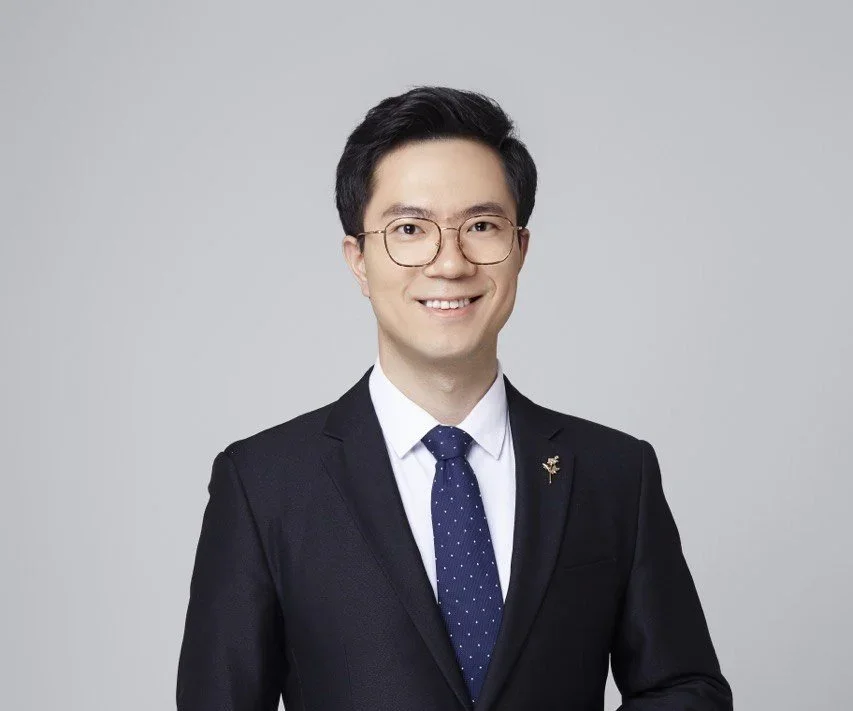
Anthony Yang
Hi, I’m Anthony, the founder of Elescend Marketing. Over the past few years, I’ve had the privilege of partnering with more than 100 small businesses across North America. This includes over 30 TCM and acupuncture clinics where we transformed their digital presence into a consistent growth engine.
I believe that successful marketing for health practitioners is about the “Science of the Sequence.” Today, I lead a specialized team of web designers, SEO experts, and media buyers dedicated to building a seamless journey for your patients. From developing high conversion, SEO ready websites to scaling your practice through precision Google and Meta advertising, our mission is to ensure your clinic dominates its local market.
I am here to help you bridge the gap between world class TCM expertise and the modern North American patient. Visit my LinkedIn profile.